Most event disasters are preventable. After more than 30 years of speaking at events around the world, I have watched some succeed beautifully and others fall apart in front of thousands of people, and almost none of the failures were bad luck.
At one event with more than 2,000 attendees, I watched the speaker before me crash. He was one of the best in the industry, and he was not having a bad day. He had a bad team. His timer stopped working, his remote would not advance his slides, and his fonts broke when his presentation moved from one computer platform to another. The event paid good money for that speaker, and an unprepared AV crew took the moment away from everyone in the room.
Budgets are tighter, every attendee has to justify the time away, and audiences expect more than they did even a year ago. Here is how to meet that standard.
What today’s audiences expect from every event
More engagement
Energy, interaction, and sessions people enjoy, no matter how technical the topic.
More value
Novel, actionable insight they cannot get from a webinar, and a clear case for attending.
Better human experience
Friction free logistics and thoughtful touches from the first search to the follow up.
The four steps below are how planners deliver all three.
Design the event around one clear objective
The first and biggest mistake organizations make is never asking what the event is for. Without a clear objective, you cannot build a curriculum, and without a curriculum you cannot choose the right speakers or position them in the right order.
Start with an honest read of the forces shaping your audience’s world. If you are planning a corporate event, understand the critical issues facing your organization at least as well as its leaders do. Short listening conversations with leaders and past attendees will tell you more than any survey.
Then decide the one thing you want your audience to do after they leave, and make it concrete in three layers: what they should feel, what they should know or believe, and what they should do. Choose three calls to action and three content pillars, no more. If your objective is the impact of artificial intelligence on hospitals and clinics, your pillars might be its impact on patients and customers, on efficiency and revenue, and on work life and culture.
Your opening keynote brings energy, shares the through line, and introduces all three pillars. Each mid conference speaker owns one pillar. Your closing keynote ties it together and inspires the audience to act.
Ask your team
What is the one thing we want our audience to do after they leave?
Which three calls to action will every speaker support?
Warning sign
Your agenda reads like a list of available speakers rather than a story. Being arbitrary about who goes on stage, and where, is one of the most damaging mistakes a planner can make.
Protect every speaker from audiovisual disasters
You can hire the best speaker in the world, but if you have not provided the resources to ensure their success, your event is at risk. Every event, big or small, needs four essentials, confirmed in writing by your production company.
| Essential | What to confirm in writing |
|---|---|
| Countdown timer | Counts backward with green, yellow, and red, visible from the stage. |
| Confidence monitor | Prewired for presenter view before load in, not promised for show day. |
| RF remote | Professional grade radio frequency, never an infrared clicker. |
| Lapel microphone | Placed at the upper center of the shirt, cable hidden, pack at the back. |
Respect the platform, too. A presentation built on a Mac rarely displays correctly on a PC, and the reverse is also true. Present Mac files from a Mac and PC files from a PC, on a current version of PowerPoint, never a free viewer. Then ask every presenter for a PDF of their slides, so your AV team can check each slide on the show computer against the original.
Ask your production team
Will you confirm the four essentials in writing before load in?
Have you checked every deck against the presenter’s PDF on the show computer?
Warning sign
You are told presenter view will be handled on site. In my experience, a quarter or more of crews arrive unprepared to deliver it.
Design your stage like a movie
Great events have an opening act, a main act, and a closing act. Your audience wants three things: to be engaged and entertained, to hear something genuinely new instead of an inventory of the obvious, and to receive insight they actually have the authority to act on.
Plan your energy. Rooms dip after meals, after long data heavy sessions, and late in the afternoon, so protect your opening and your closing, because they are what people remember. Audit every session for novelty by writing down the obvious version of the talk and what will be genuinely new. If you cannot answer the second question, the session needs more work or a different speaker.
Finally, invest in your master of ceremonies. A good MC is the program. They carry the energy, connect every session, and set up every speaker to succeed. If your MC is an internal leader, make sure they are trained and fully briefed on the event strategy.
Ask your team
What is the obvious version of each session, and what will be genuinely new?
Warning sign
Your most data dense session sits right after lunch, or the event ends with housekeeping announcements.
Architect the human experience
Meeting planners are in the Human Experience Innovation® business. Your attendees experience your event across five touch points, and each one should exceed their baseline expectation.
| Touch point | What it means for your event |
|---|---|
| Pre-touch | While they research your event and decide whether it matters. |
| First touch | Registration, which should be simple and friction free. |
| Core touch | The event itself, from hotel and travel to how the room looks, sounds, and feels. |
| Last touch | The closing moment and the resources they take home. |
| In-touch | How you deliver real value all year, without selling. |
Register for your own event and write down every moment of hesitation. Walk the path from the hotel lobby to a seat in the ballroom. Long badge lines, confusing signs, and slow food service are an emotional tax on attendees, and they color how people judge every session that follows. Build personas around what attendees love and hate rather than demographics, and design for your sponsors too, because they experience the same five touch points.
Ask your team
Where is the friction between the hotel lobby and a seat in the ballroom?
What will attendees still value from us six months after the event?
Warning sign
Your only follow up after the event is a survey and next year’s registration link.
Bring it together into one strategy
When objective, curriculum, production, stage, and experience are designed together, the results follow. Attendance grows, sponsors renew, and your event becomes the one your industry talks about.
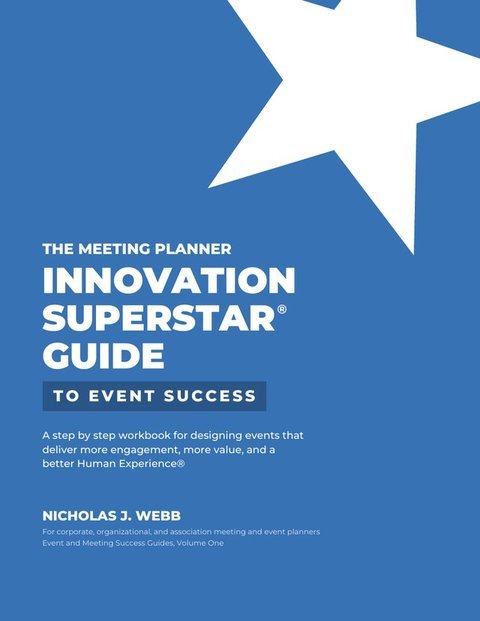
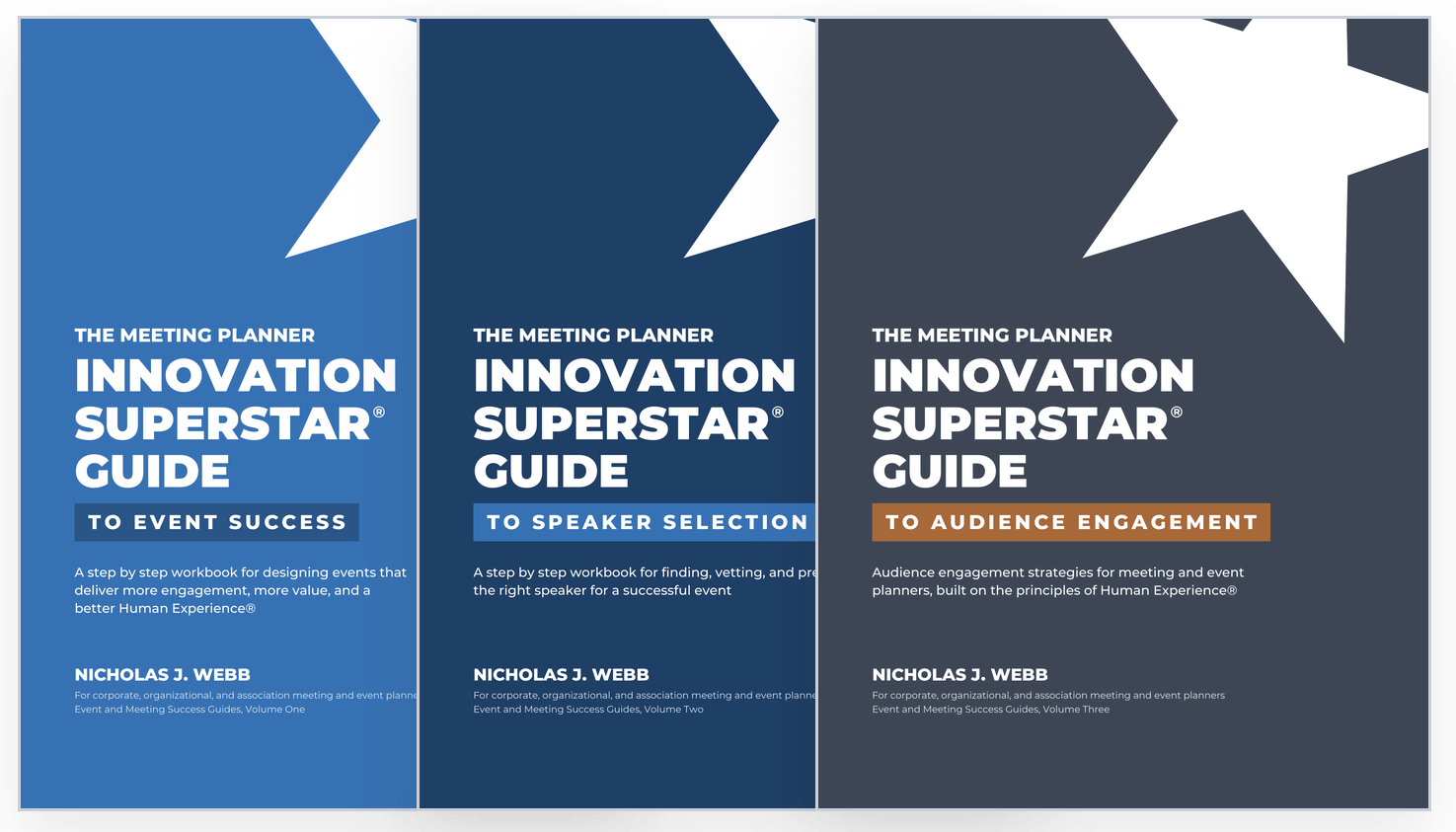
The free Meeting Planner Innovation Superstar® Guide to Event Success walks you through every step with fillable worksheets and checklists, so you finish with an integrated strategy you can hand to leadership, your speakers, your MC, and your production partner.
Great events are not accidents. They are architected.
Questions planners ask
How early should we start planning?
Set your objective, Rule of Three, and pillars nine to twelve months out, and book your opening and closing keynotes in that window.
Does this apply to smaller events?
Yes. A clear objective and the four AV essentials matter for an audience of 80 as much as for 8,000.
What if leadership wants every topic covered?
Show them the Rule of Three. Ten takeaways are the same as none, and three is the number people remember and act on.
Who should see our event strategy?
Leadership, every speaker, your master of ceremonies, and your production partner.
About the author
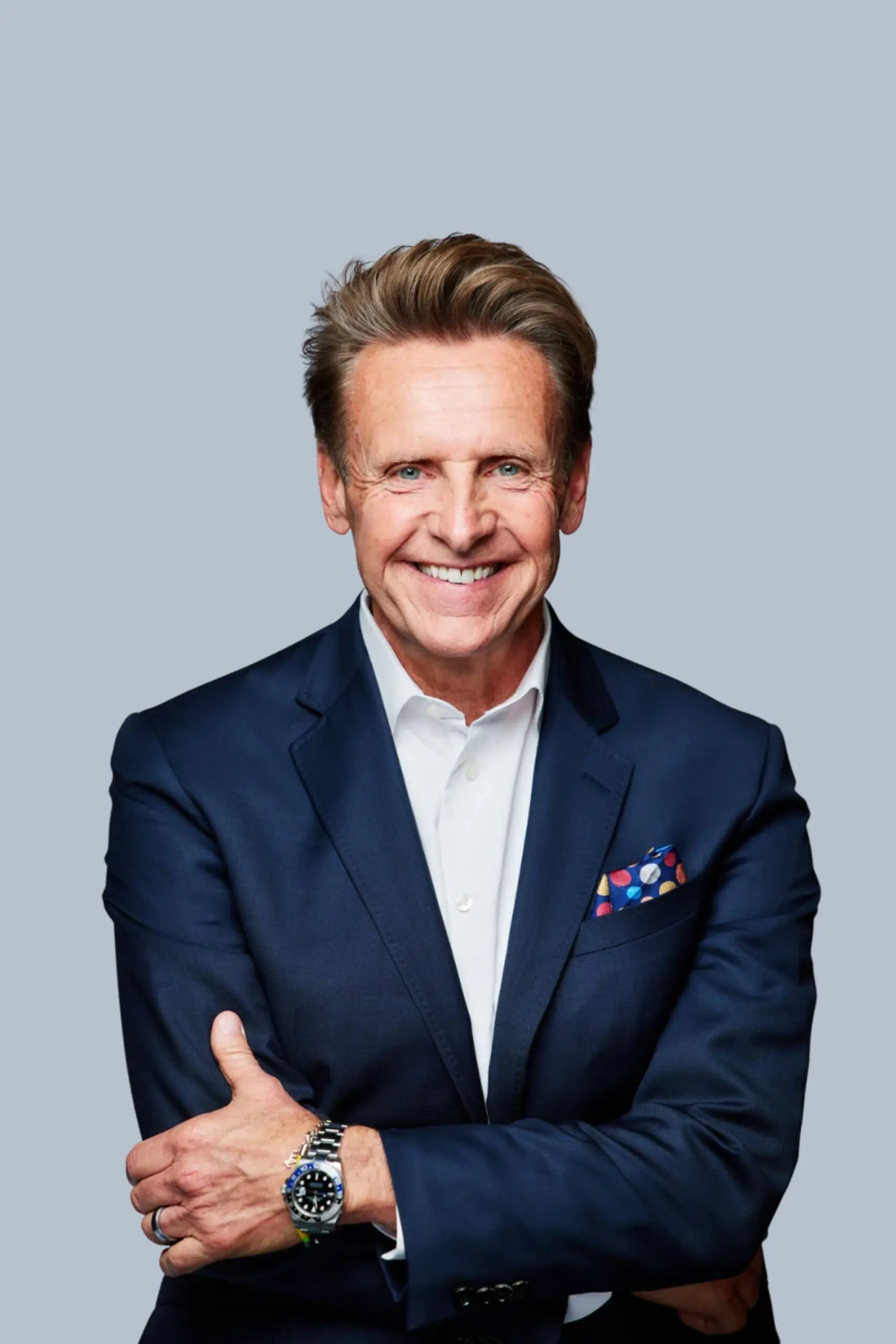
Nicholas J. Webb is a keynote speaker, futurist, bestselling author, and inventor who has delivered customized keynotes to audiences around the world for more than 30 years. He holds more than 40 patents and is the author of Human Experience, What Customers Crave, What Customers Hate, Chaotic Change, and Lucid Leadership. He has been named to the Global Gurus Top 30 list of customer service experts nine years in a row.
Get the Complete 79 Page Guide, Free
Download the Free Guide