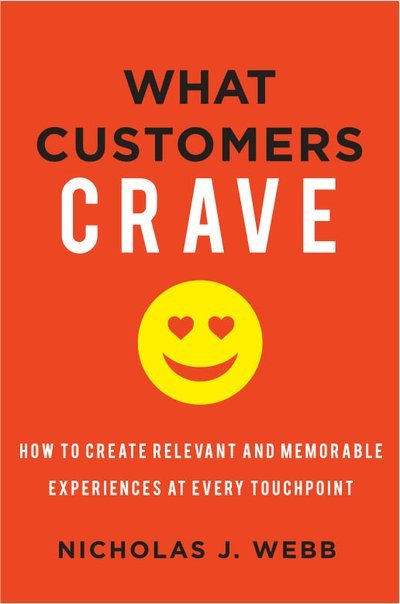
What Customers Crave by Nicholas J. Webb | Book Summary and Key Takeaways

What Customers Crave How to Create Relevant and Memorable Experiences at Every Touchpoint

What Customers Crave shows organizations how to build customer experience around two questions: what do your customers love, and what do they hate? The book replaces demographic segmentation with customer types and gives leaders a practical model for designing exceptional experiences across five touchpoints, from the moment a customer first hears about you to long after the sale.

What Customers Crave book cover by Nicholas J. Webb

The book in brief

In What Customers Crave, Nicholas J. Webb argues that the old model of customer service is failing in a hyperconnected economy. Customers now compare every interaction with the best experience they have had anywhere, and they share what they think in public, instantly. Service goals, scripted messages, and incentive programs are not enough.

Webb's answer is to simplify. If an organization can confidently answer what its customers love and what they hate, it can design experiences that turn buyers into advocates. The first half of the book explains how to understand customers by type rather than by demographics and how to treat customer experience as an innovation discipline. The second half maps the customer journey across five touchpoints and closes with a roadmap for putting the model to work.

The book is written for executives, customer experience leaders, marketing and sales teams, and anyone responsible for how customers feel about doing business with an organization, in person or online.

The core framework

Three ideas carry the book: two questions that define the customer, five touchpoints that define the journey, and three principles that turn insight into experience.

What do your customers love?

The experiences, behaviors, and moments that create delight, loyalty, and word of mouth. These are the things to protect and amplify.

What do your customers hate?

The friction, frustration, and broken promises that push customers away, often silently. These are the things to remove first.

The five touchpoints

Pre-Touch

Everything a customer sees, hears, and reads before deciding to engage with you.

First Touch

The first impression: the greeting, the landing page, the first call.

Core Touch

Where the product or service is delivered, and where many organizations become operations centric.

Last Touch

The closing moment of an interaction, which shapes memory and referral.

In-Touch

How you stay relevant and connected after the transaction ends.

Understand, invent, express

Understand

Know your customers through what they love and what they hate, not through demographics.

Invent

Create new experiences for each customer type rather than polishing old ones.

Express

Deliver those experiences consistently across every channel, digital and human.

Practical guides from What Customers Crave

How do you create a customer service strategy?

Start with two questions instead of a service script: what do your customers love, and what do they hate? Webb argues that a strategy built on those answers outperforms one built on policies, slogans, and incentive programs, because it is anchored in what customers actually experience.

Define your customer types.Group customers by what they value and how they want to be served, not by age, income, or zip code. Most organizations find a handful of distinct types.

Map every touchpoint for each type.Walk the pre-touch, first touch, core touch, last touch, and in-touch moments and note where each type feels love and where it feels hate.

Invent, do not just improve.Webb treats customer experience as an innovation activity. The goal is to disrupt the experience, not to make a mediocre one slightly better.

Keep listening.Build listening posts across reviews, social channels, frontline feedback, and direct conversations, and review them continuously rather than once a year.
How do you train employees on customer experience?

Train employees on the customer, not on the script. When teams understand each customer type and what that type loves and hates, they can make good decisions in the moments no policy anticipated.

Teach the five touchpoints.Every role touches the journey somewhere, including back office roles that shape the core touchpoint. Show each team exactly where it fits.

Use real customer stories.Material drawn from your own listening posts teaches faster and sticks longer than generic service training.

Give people permission to fix things.Frontline employees who can solve a problem on the spot protect the relationship far better than those who must escalate.

Measure experience, not just efficiency.When teams are rewarded only for speed and cost, they drift from customer centric to operations centric. Put experience on the same scorecard.

How do you improve customer satisfaction?

Find what each customer type loves and hates at every touchpoint, remove the biggest sources of frustration first, then design deliberate moments of delight. Satisfaction rises when the whole journey improves, not only the point of sale.

Locate the largest gap.For each touchpoint, compare what customers expect with what they get. Start where the gap is widest.

Protect the core touchpoint.This is where internal processes most often override customer needs. Redesign it from the customer's side of the counter.

Design the last touch on purpose.The final moment of an interaction shapes what customers remember and what they tell others.

Stay in touch with relevance.Follow up with something useful to that customer type, not a generic promotion.

How do you develop a customer centered culture?

A customer centered culture forms when every team can answer what its customers love and hate and is measured on the experience it creates. Webb's three principles, understand, invent, and express, give leaders a working sequence for building it.

Understand.Make customer types and their loves and hates shared knowledge across the organization, not something held by marketing alone.

Invent.Give teams time and permission to create new experiences, and bring customers into the process so ideas are tested against real needs.

Express.Deliver the experience consistently across digital and human channels, and tell the internal story of what good looks like.

Lead it visibly.Culture follows what leaders pay attention to. When executives review customer insight as seriously as financial results, the organization notices.

How do you map the customer journey?

Map the journey one customer type at a time across five touchpoints: pre-touch, first touch, core touch, last touch, and in-touch. At each stage, record what that customer loves and hates, then redesign the moments that matter most.

Choose one customer type.A journey map built for everyone is useful to no one.

Walk it as the customer.Experience each touchpoint yourself, digital and in person, and document what you see, wait for, and feel.

Score love and hate at every stage.Use customer feedback, not internal assumptions, to fill in the map.

Redesign, then walk it again.Journeys change as expectations rise. Revisit each map on a regular schedule.

How do you identify customer types instead of using demographics?

Customer typing groups people by what they value and how they want to be served. In Webb's words, it moves you from what your customers are to who they are, which is far more useful for designing experiences than age, income, or location.

Gather signals.Pull from reviews, service records, sales conversations, and social channels.

Look for shared loves and hates.Clusters of customers who want the same things, and dislike the same things, form a type.

Name each type in plain language.Teams remember and use names that describe behavior.

Design for each micromarket.Build experiences that are not only exceptional but highly relevant to each type, and validate them with real customers.

Want these ideas on your stage?

Nick delivers keynotes built on What Customers Crave, customized to your audience and industry.

Key terms from the book

Customer types
Groups of customers defined by what they love, what they hate, and how they want to be served, used in place of demographic segments.
Listening posts
The channels an organization uses to hear customers continuously, from reviews and social media to frontline conversations.
Contact Point Innovation
Webb's approach to refining customer types and inventing better experiences at each point of contact.
Micromarkets
Small, well defined groups of customers for whom experiences can be engineered to be highly relevant.
Five touchpoints
Pre-touch, first touch, core touch, last touch, and in-touch: the stages where experience is won or lost.
Operations centric drift
What happens at the core touchpoint when internal processes take priority over the customer.

Key takeaways

Customer experience starts with two questions: what do your customers love, and what do they hate?

Know who your customers are, not just what they are.

Exceptional experiences must be delivered at all five touchpoints, not only at the point of sale.

Customer experience is an innovation activity. Aim to disrupt the experience, not polish it.

Customers who get exactly what they want come back again and bring their friends.

Frequently asked questions

Who wrote What Customers Crave?

What Customers Crave was written by Nicholas J. Webb, a futurist, keynote speaker, inventor with more than 40 US patents, and CEO of the consulting firm LeaderLogic. He has been named to the Global Gurus Top 30 list of customer service experts nine years in a row.

When was What Customers Crave published?

The hardcover was published by AMACOM in October 2016 with a 2017 copyright. A paperback edition was later released by HarperCollins Leadership, and the book is also available as an ebook and an audiobook narrated by James Foster.

What are the two questions in What Customers Crave?

What do your customers love, and what do they hate? Webb argues that an organization able to answer both questions confidently, for each customer type, can design experiences that turn customers into advocates.

What are the five customer touchpoints?

Pre-touch, before the customer decides to engage. First touch, the first impression. Core touch, when the customer actively uses the product or service. Last touch, the closing moment of an interaction. In-touch, how the relationship continues after the transaction.

Is What Customers Crave useful for B2B companies?

Yes. The framework applies to any organization with customers, whether it sells to consumers or to other businesses, and covers both digital and in person experiences.

How is What Customers Crave different from What Customers Hate?

What Customers Crave covers the full customer experience model, from customer types to the five touchpoints. What Customers Hate, published by HarperCollins Leadership in 2022, goes deeper on eliminating the friction that drives customers away.

Does Nicholas Webb speak on the ideas in this book?

Yes. Nick delivers keynotes and workshops on customer experience and human experience design for corporations, associations, and healthcare organizations, customized to each audience.

Nicholas J. Webb, keynote speaker, futurist, and bestselling author

About the Author

Nick Webb is a number one bestselling author and futurist who curates the future for audiences across industries, from innovation and technology to leadership and the future of healthcare. He is also CEO of LeaderLogic, where he advises boards of multibillion dollar companies on building future ready organizations.

His career began as a technologist creating award winning innovations in healthcare, consumer goods, and industrial technology, work that earned him more than 40 US patents. Today he operates an AI Lab with new patents in continuous patient monitoring and the analysis of mood states using artificial intelligence.

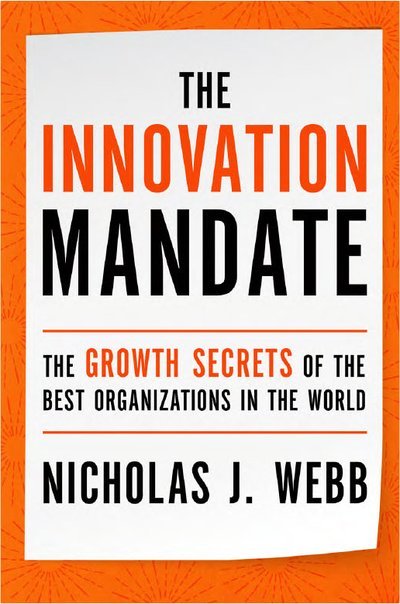
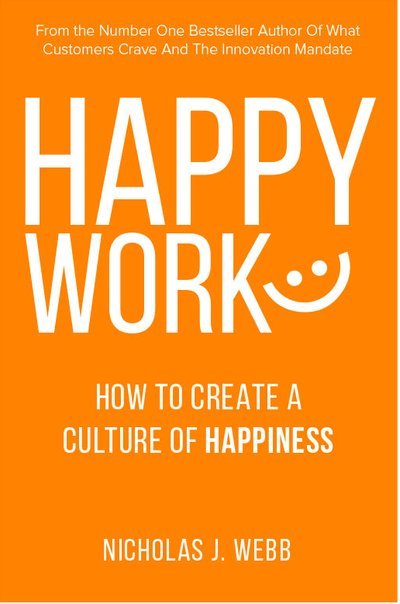
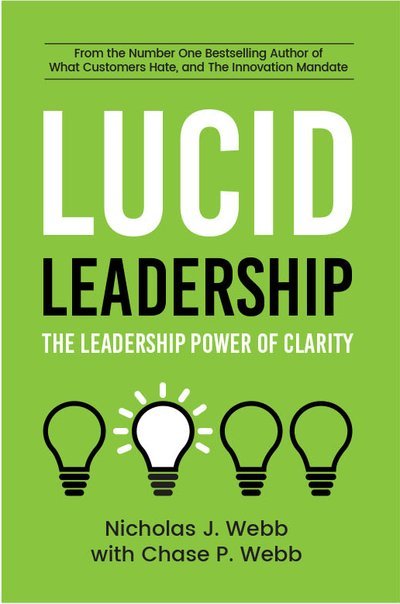
Nick is the author of bestsellers including What Customers Crave, The Innovation Mandate, What Customers Hate, Happy Work, Lucid Leadership, and Chaotic Change. He has served as a Chief Innovation Officer and an adjunct professor at a top medical school, and was awarded an honorary Doctorate of Humane Letters for his contributions to healthcare. His documentary, The Healthcare Cure, won the Audience Choice Award at the Sedona International Film Festival.

Audiences embrace his lively, high energy, and meticulously tailored presentations, which is why the world's best organizations and the meeting planners who serve them keep bringing him back.

Bring What Customers Crave to your event

A customer experience keynote built on the ideas in the book, customized to your audience and industry.

Check availability

Make your event the one everyone remembers.

Share a few details about your event, and Nick’s team will get right back to you about availability, fit, and how he can make your audience and you look great.

Prefer to talk now? Call (530) 782-2625

Check Nick's availability

Tell us about your event and we will follow up personally.

Prefer to talk now? Call (602) 233-7107