The Innovation Mandate by Nicholas J. Webb | Book Summary and Key Takeaways

The Innovation Mandate The Growth Secrets of the Best Organizations in the World

The Innovation Mandate gives leaders a clear, step by step process for generating great ideas, implementing them, and turning them into value for customers and investors. Webb's argument is simple: innovation is a learnable discipline, not a gift reserved for a few creative people, and the best organizations run it like any other core business process.

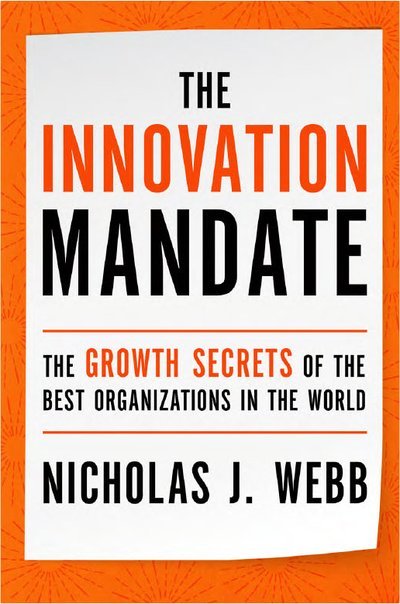
The Innovation Mandate book cover by Nicholas J. Webb

The book in brief

In The Innovation Mandate, Nicholas J. Webb argues that in an ultracompetitive market the difference between growth and decline is a steady flow of new ideas. Innovation lets a company introduce new products and services, connect with customers, sharpen its supply chain, manage finances efficiently, and attract and keep the best people.

Webb demystifies the subject by building the book around three ideas: innovation generates profits; profitable ideas can come from anywhere in the organization; and finding, evaluating, and implementing those ideas cannot be left to chance. He describes an innovation operating system and pipeline that evaluates ideas by possibility, desirability, and priority, and he offers a five point checklist to confirm that a company is ready to innovate.

The book is written for CEOs, executives, and managers who want innovation to become part of everyday operations, aligned with the organization's mission rather than separate from it.

The core framework

The book is built on three core ideas and a disciplined way to evaluate every new idea that enters the pipeline.

Three core ideas

Innovation generates profits

Innovation is a growth engine, not a cost center or a side project.

Ideas can come from anywhere

Profitable ideas come from every level and function, not only from research or leadership.

Ideas cannot be left to chance

Finding, harnessing, evaluating, and implementing ideas requires a system.

How ideas are evaluated

Possibility

Can the idea realistically be built and delivered?

Desirability

Do customers and the business actually want it?

Priority

Does it deserve resources now, compared with everything else in the pipeline?

Practical guides from The Innovation Mandate

How do you build an innovation strategy?

Treat innovation as an operating system, not an event. Webb's approach starts by tying innovation directly to the organization's mission and growth goals, then building a repeatable process that captures ideas, evaluates them, and moves the best ones into the market.

Anchor it to the mission.Innovation that is not aligned with what the organization exists to do will be starved of support.

Define where you will innovate.Products and services matter, but so do customer experience, supply chain, finance, and talent.

Build the pipeline before you need it.A steady, predictable flow of ideas beats occasional brainstorms.

Measure innovation like any other investment.Track ideas captured, ideas tested, ideas launched, and the value they create.


How do you create a culture of innovation?

A culture of innovation forms when every employee believes their ideas are wanted and sees evidence that good ideas get acted on. Webb argues that inventing is a set of learnable actions, so the leader's job is to teach the process and remove the fear that blocks it.

Make it everyone's job.Invite ideas from every level and function, not only from designated innovators.

Teach the method.Show people how to frame a problem, develop an idea, and test it quickly.

Make risk survivable.If failure is punished, ideas stop. Reward thoughtful experiments, not only successes.

Show results.Publicize ideas that were implemented and the people behind them.

How do you get innovative ideas from employees?

Ask systematically, make it easy to contribute, and respond to every submission. Employees closest to customers and operations often see the best opportunities, but they share them only when the process is simple and leaders visibly follow through.

Ask specific questions.Targeted challenges produce better ideas than an open suggestion box.

Lower the barrier.A short form or quick conversation captures more ideas than a formal proposal.

Respond to everyone.Even a no, explained, keeps people contributing.

Recognize contributors.Credit and visibility motivate more than most leaders expect.

How do you evaluate and prioritize new ideas?

Evaluate every idea against three questions: is it possible, is it desirable, and is it a priority right now? Running ideas through the same filter keeps decisions consistent, reduces politics, and focuses resources on the opportunities most likely to create value.

Possibility.Assess technical feasibility, cost, and the capabilities required.

Desirability.Test whether customers want it and whether it fits the strategy.

Priority.Compare it with everything else in the pipeline and decide what moves first.

Revisit regularly.An idea that is not a priority today may be the right move next quarter.

How do you build an innovation pipeline?

An innovation pipeline is the system that moves ideas from capture to launch. Build stages for collecting ideas, screening them, testing the promising ones quickly, and scaling the winners, with clear owners and decision points at each step.

Capture.Collect ideas continuously from employees, customers, and partners.

Screen.Apply consistent criteria so the strongest ideas rise quickly.

Test.Run small, fast experiments to learn before investing heavily.

Scale.Give proven ideas the resources and leadership attention to reach the market.

How do you know if your company is ready to innovate?

An organization is ready to innovate when leadership treats innovation as a mandate, ideas have a clear path from capture to decision, and people are not afraid to try. The Innovation Mandate includes a five point checklist to test that readiness before a company invests.

Leadership commitment.Executives must sponsor innovation visibly and consistently.

A defined process.Ideas need a known route to evaluation and action.

Resources.Time, budget, and people must be set aside, not borrowed.

Psychological safety.Teams must be able to propose and test ideas without fear.

Want these ideas on your stage?

Nick delivers keynotes built on The Innovation Mandate, customized to your audience and industry.

Key terms from the book

Innovation operating system
The set of processes, roles, and decision rules that make innovation a routine part of how an organization runs.
Innovation pipeline
The stages ideas pass through from capture to screening, testing, and launch.
Possibility
Whether an idea can realistically be built and delivered.
Desirability
Whether customers and the business genuinely want the idea.
Priority
Whether an idea deserves resources now relative to other opportunities.
Innovation ready
Webb's term for an organization that has the leadership, process, and culture to innovate successfully.

Key takeaways

Innovation generates profits. Treat it as a growth engine, not a side project.

Profitable ideas can come from anyone in the organization.

Inventing is a learnable set of actions, not a rare talent.

Evaluate every idea by possibility, desirability, and priority.

Innovation cannot be left to chance. It needs a system.

Frequently asked questions

Who wrote The Innovation Mandate?

The Innovation Mandate was written by Nicholas J. Webb, an inventor with more than 40 US patents, former Chief Innovation Officer, and CEO of the consulting firm LeaderLogic.

When was The Innovation Mandate published?

HarperCollins Leadership published The Innovation Mandate in September 2019. It is available in hardcover, ebook, and as an audiobook narrated by Tom Parks.

What are the three core concepts of The Innovation Mandate?

Innovation generates profits; innovative, profitable ideas can come from anywhere; and identifying, harnessing, evaluating, and implementing those ideas cannot be left to chance.

How does The Innovation Mandate recommend evaluating ideas?

Ideas move through a pipeline and are judged on possibility, desirability, and priority, so resources go to the opportunities most likely to create value.

Is The Innovation Mandate only for large companies?

No. The approach applies to startups, midsize firms, and global enterprises alike. The principles of a steady idea flow and disciplined evaluation scale to any size.

Does Nicholas Webb speak on innovation?

Yes. Innovation is Nick's core keynote topic. He speaks as a practicing inventor who runs his own innovation lab, customizing each keynote to the audience and industry.

Nicholas J. Webb, keynote speaker, futurist, and bestselling author

About the Author

Nick Webb is a number one bestselling author and futurist who curates the future for audiences across industries, from innovation and technology to leadership and the future of healthcare. He is also CEO of LeaderLogic, where he advises boards of multibillion dollar companies on building future ready organizations.

His career began as a technologist creating award winning innovations in healthcare, consumer goods, and industrial technology, work that earned him more than 40 US patents. Today he operates an AI Lab with new patents in continuous patient monitoring and the analysis of mood states using artificial intelligence.

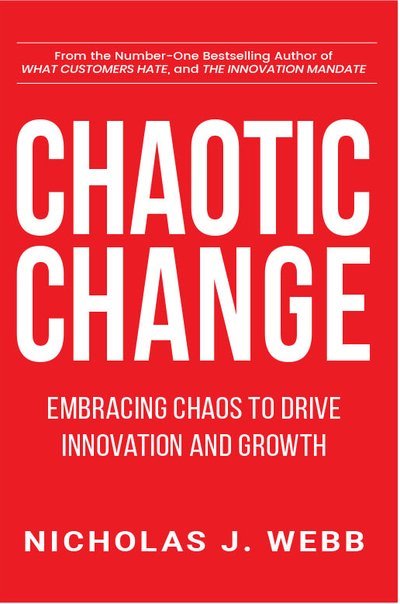
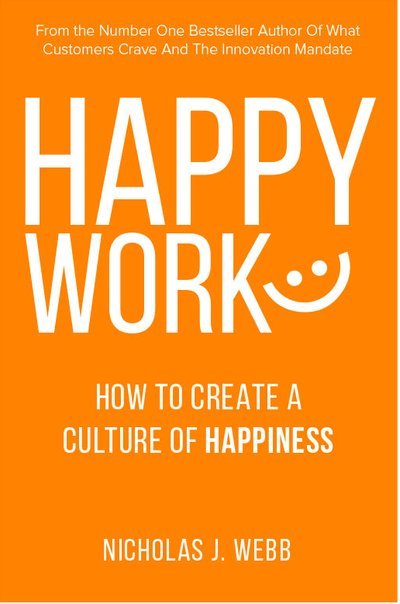
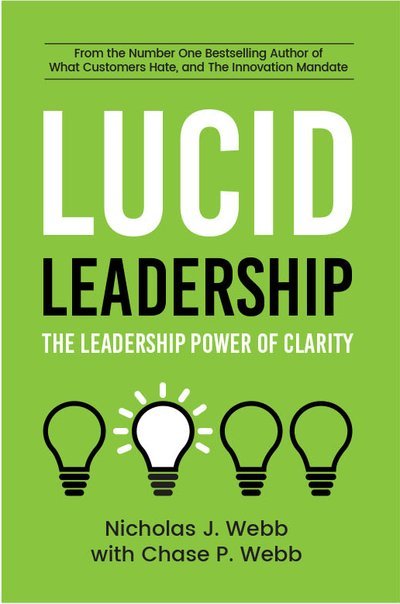
Nick is the author of bestsellers including What Customers Crave, The Innovation Mandate, What Customers Hate, Happy Work, Lucid Leadership, and Chaotic Change. He has served as a Chief Innovation Officer and an adjunct professor at a top medical school, and was awarded an honorary Doctorate of Humane Letters for his contributions to healthcare. His documentary, The Healthcare Cure, won the Audience Choice Award at the Sedona International Film Festival.

Audiences embrace his lively, high energy, and meticulously tailored presentations, which is why the world's best organizations and the meeting planners who serve them keep bringing him back.

Bring The Innovation Mandate to your event

An innovation keynote from a practicing inventor, built on the ideas in the book and customized to your audience.

Check availability

Make your event the one everyone remembers.

Share a few details about your event, and Nick’s team will get right back to you about availability, fit, and how he can make your audience and you look great.

Prefer to talk now? Call (530) 782-2625

Check Nick's availability

Tell us about your event and we will follow up personally.

Prefer to talk now? Call (602) 233-7107